The digital landscape in Oman is undergoing a fundamental transformation. Driven by the ambitious goals of Oman Vision 2040, internet penetration has exceeded 95%, and consumer behavior has shifted decisively toward mobile-first, omnichannel experiences. Yet, despite this rapid modernization, many businesses in the Sultanate are still operating on outdated digital marketing assumptions.
For years, digital success in the region was measured by vanity metrics: follower counts, likes, and broad reach. While these numbers look impressive on a monthly report, they rarely correlate directly with business growth. In 2026, as the GCC digital advertising market becomes more competitive and Cost Per Thousand Impressions (CPMs) rise, optimizing for “likes” is a luxury that ambitious brands can no longer afford.
The Cost of Inefficiency
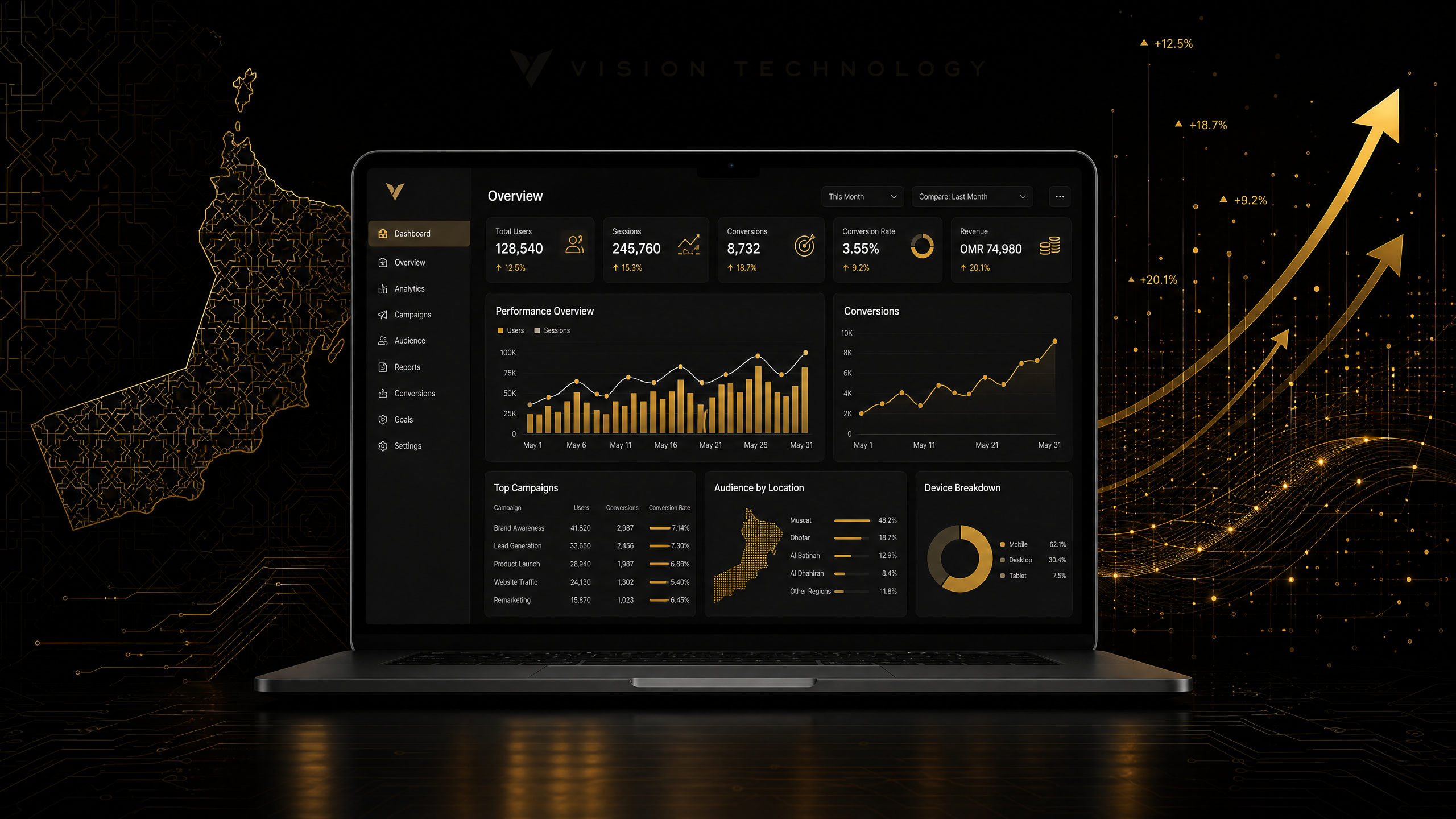
The default campaign settings on major platforms like Meta and Google are designed to spend budgets quickly, often prioritizing cheap engagement over high-intent actions. Brands that fail to implement precise tracking and advanced audience architecture find themselves paying premium prices for unqualified traffic. In the current market, the focus must shift from how many people saw an ad to how much revenue that ad generated.
This shift requires a structural change in how marketing teams operate. It means moving away from isolated campaigns and toward integrated customer journeys. It means understanding that a single high-quality lead generated through a well-structured Google Search campaign is infinitely more valuable than a thousand passive views on a generic social media post.
Building a Data-Driven Growth Engine
To thrive in Oman’s evolving digital economy, businesses must adopt a performance-first mindset. This begins with data integrity. Implementing robust tracking solutions, such as Meta’s Conversions API (CAPI) and Google Tag Manager, ensures that every marketing dollar is accountable. When you can accurately attribute revenue to specific channels, you can make informed decisions about budget allocation.
Furthermore, the modern marketing stack must include intelligent automation. Platforms like WebEngage allow brands to unify their customer data, segment high-value audiences, and automate personalized communication across the entire lifecycle. This transition from broad broadcasting to targeted, data-driven engagement is what separates market leaders from those left behind.
At Vision Technology, we believe that data without strategic insight is just numbers. Our approach connects performance advertising, social strategy, and customer engagement automation into a single, measurable growth framework. It is time to stop paying for vanity metrics and start investing in real business outcomes.